
Best-Known Representative of Art Nouveau
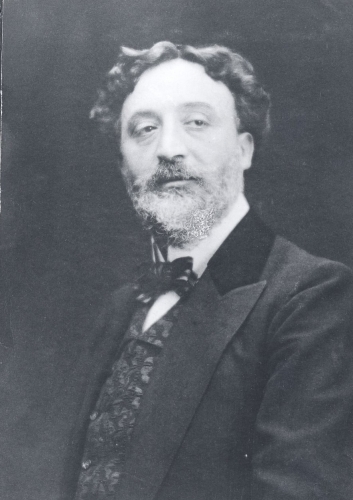
Historical Information:
French architect (1867-1942)
Hector Guimard was an architect, who is now the best-known representative of the French Art Nouveau style of the late 19th and 20th centuries.
Guimard’s critical reputation has risen since the 1960s, as many art historians have praised his architectural and decorative work, the best of ot done during a relatively brief fifteen years of prolific creative activity.
- 1885 Guimard begins studying at the Ecole Nationale et Speciale des Beaux-Arts in Paris
- 1891 Guimard becomes an Assistant professor in descriptive geometry, shadow, and perspective drawings
- 1892 Professor the following year in of the girl’s section
Major Works:
- École du Sacré Coeur (Sacred Heart School), Paris (1895)
- Castel Beranger, Paris (1895-98)
- Humbert de Romans Concert Hall and School, Paris (1897-1901; destroyed 1905)
- Entrances for the Paris Métropolitain (1899-1900)
- Castel Henriette, Sèvres, France (1899; destroyed 1969)
- Dining Room suite for the Hôtel Guimard, Paris (1909)
- Agoudas Hakehilos Synagogue, Paris (1913)
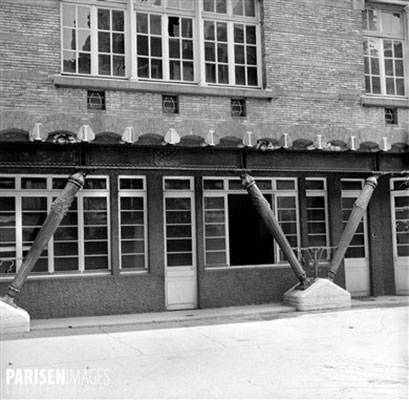
École du Sacré Coeur
(Sacred Heart School)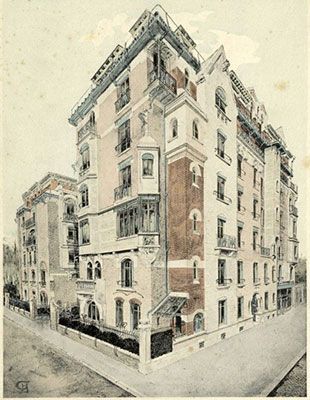
Castel Beranger 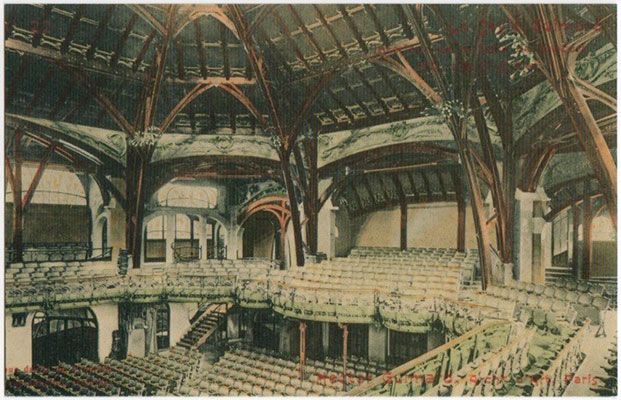
Humbert de Romans Concert Hall and School 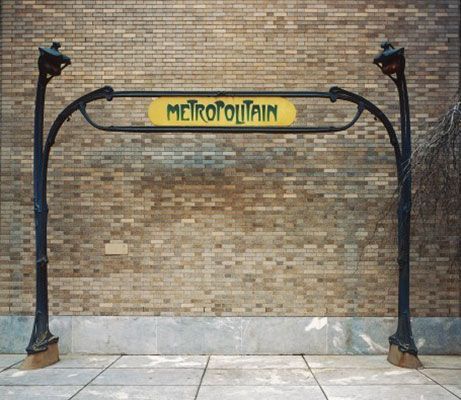
Entrances for the Paris Métropolitain 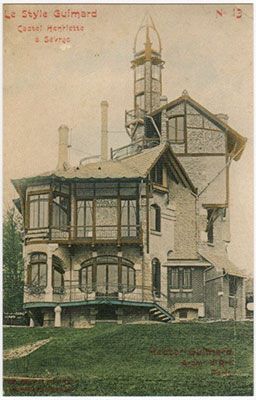
Castel Henriette 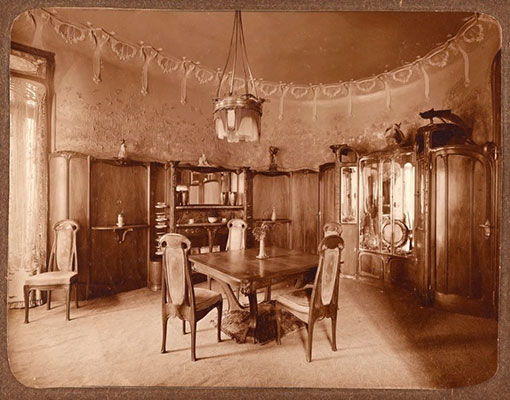
Dining Room suite for the Hôtel Guimard 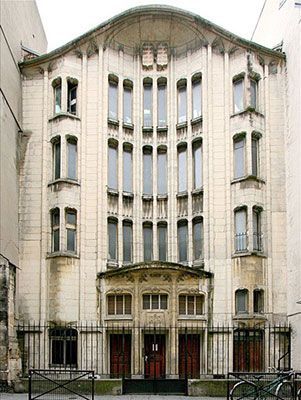
Agoudas Hakehilos Synagogue
Characteristics:
Hector Guimard is regarded as the leading exponent of the Art nouveau style, which is often called the “Style Guimard” in France.
His work is easy to distinguish amongst other practitioners of the style, with plastic, abstracted and sometimes bizarre vegetal and floral imagery in iron, glass, and carved stone that is usually twisted and bent into irregular and asymmetrical forms.
Guimard wanted to be seen as an “architecte d’art” – an expert in the techniques of all the arts. He saw “decoration” as the true essence of a building. Thus in the works Guimard created for the buildings of the Parisian middle class, and the Metro stations, he presents an architectural art that used the curved line and ornamental decoration to delight the public.
Motifs & Ornamentation:
Guimard’s art objects have the same formal continuity as his buildings, harmoniously uniting practical function with linear design. His inimitable stylistic vocabulary suggests plants and organic matter, while remaining resolutely on the side of abstraction. Flexible moldings and a sense of movement are found in stone as well as wood carvings. Guimard created abstract two-dimensional patterns that were turned into stained glass (Mezzara hotel, 1910), ceramic panels (Coilliot house, 1898), wrought iron (Castel Henriette, 1899), wallpaper (Castel Béranger, 1898) or fabric (Guimard hotel, 1909).
Influences on Other Designs:
- Viollet le Duc- French theorist best known for his work entertains
- ANATOLE de BAUDOT- a student of Viollet and Guimard’s master at Beaux- arts
- Victor Horta- Art Nouveau style architect of Belgian origin
- Jan Toorop- artist
Contemporaries:
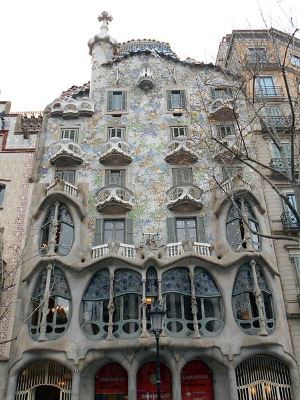
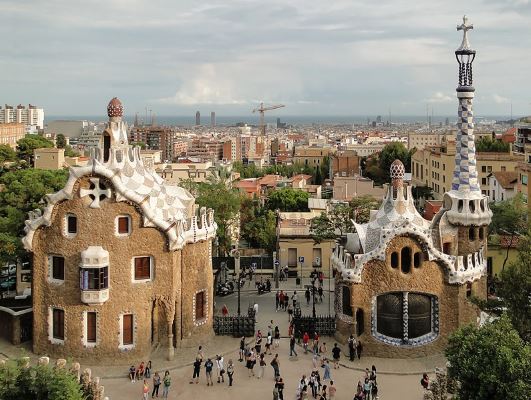
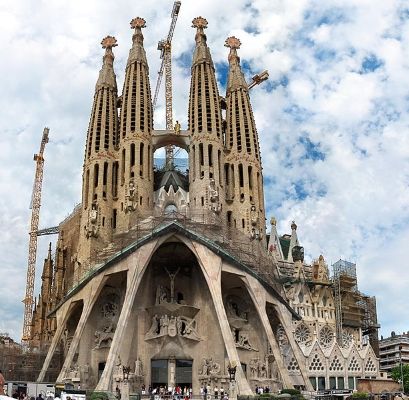
Hector Guimard was one of the leading representatives of the Art Nouveau movement in Paris, comparable to Antoni Gaudi in Barcelona of Victor Horta in Brussels.
Videos:
Interesting Facts:
- Though well-educated at the École nationale des arts décoratifs, and familiar with many of the leading French architectural theorists, Guimard attended but did not receive a diploma from the École des Beaux-Arts as was the norm for most French academic architects at the end of the 19th century, and was often thought of during his lifetime as outside the mainstream of architectural practice.
- Guimard’s Paris Métro entrances are his signature work and classic emblems of Art Nouveau, which combine the movement’s embrace of nature as well as the advances of technology, standardization, and modernization. Their sinuous, unusual forms stand out against the typical street environments, making them ideal for their functions, and they have become worldwide icons for mass transit design.
References:
https://www.britannica.com/biography/Hector-Guimard
http://www.art-nouveau-around-the-world.org/en/artistes/guimard.htm

 Discovering Designers: