
God’s Architect
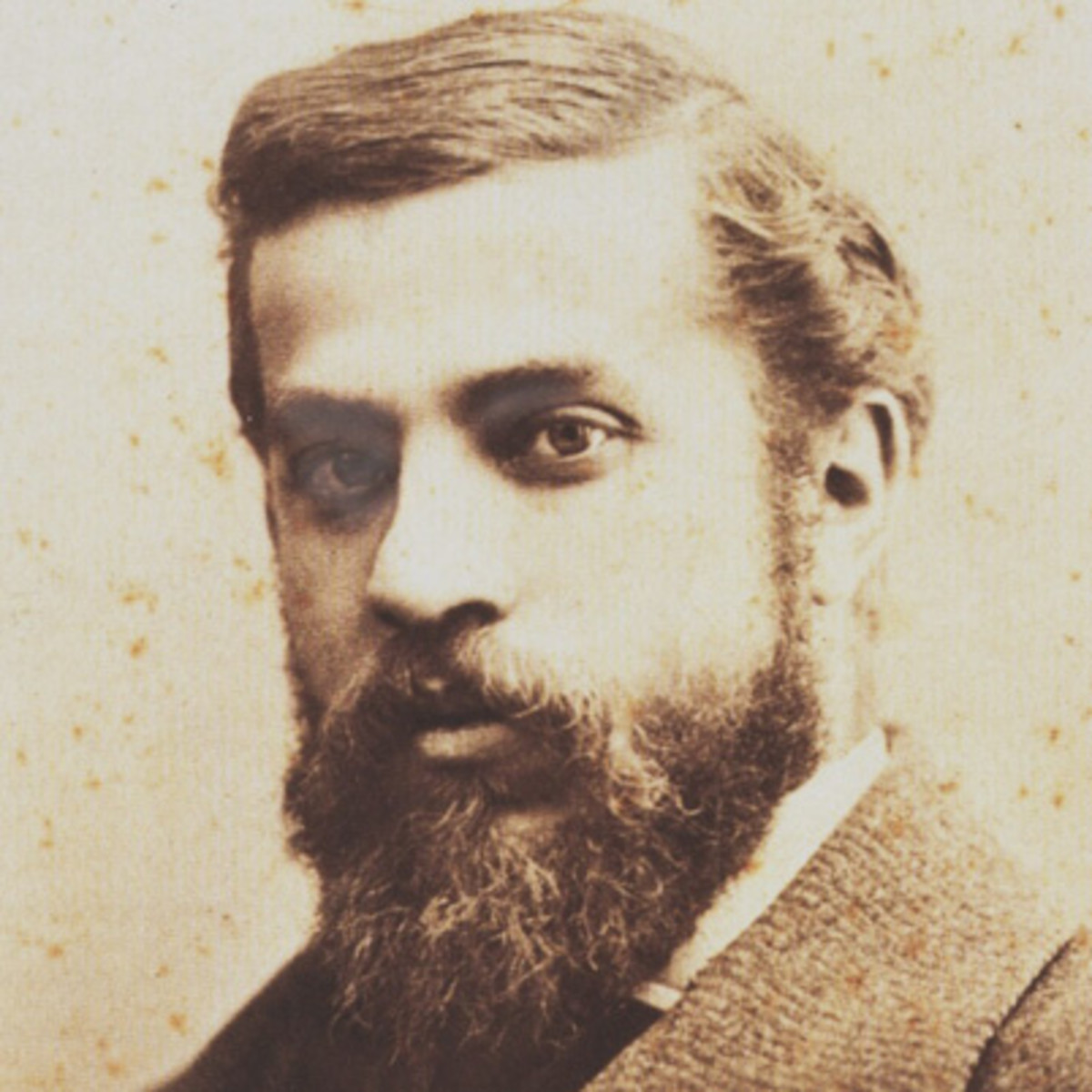
Architect (1852-1926)
- He was an Spanish architect born un Reus (Baix Camp, Catalonia)
- After leaving the school, he went to Barcelona
- He graduated as architect in 1878.
- Almost his entire professional activity took place in Barcelona.
Antoni Placid Guillem Comet became vegetarian at a young age. Spanish architect whose idiosyncratic work, characterized by undulating curves and richly colored scrambled textures, won wide international recognition only after the mid-20th century. Develop his unique style–blending elements of Gothic art, art nouveau, known as modernism in Catalonia, and functional structure. His favorite forms were inclined columns to add stress to ceilings, paraboloid arches, thin edge-butted tile vaults, and the richest, most colorful textures possible, often mosaics made of broken tile scraps. He didn’t draw his buildings, but made 3D models/sculptures. His nicknames was ‘God’s Architect’ due to the religious images in his work.
Major Works:
- Casa Vicens (1877-83)
- Palau Güell (1886 – 88)
- Colònia Güell (1890 – 1918)
- Casa Batlló (1904 – 06)
- Two-person sofa for the Casa Batlló (1904-06)
- Parc Güell (1900-14)
- Expiatory Church of the Sagrada Família (1882 – present)
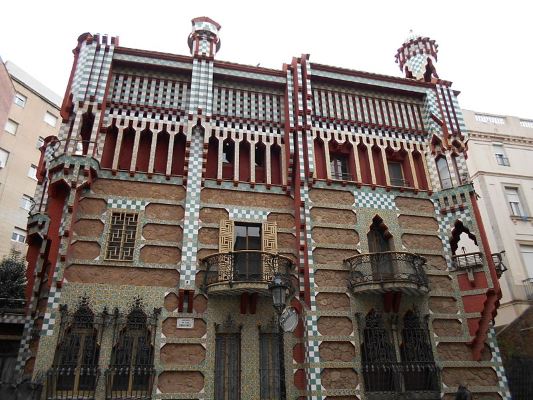
Casa Vicens 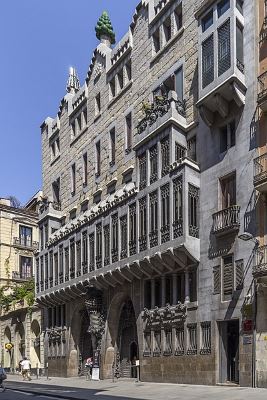
Palau Güell 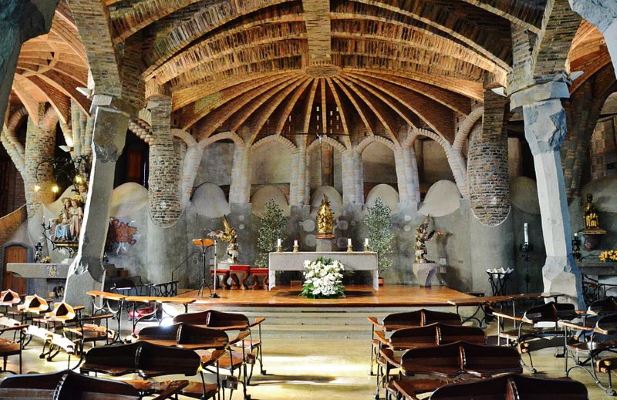
Colònia Güell 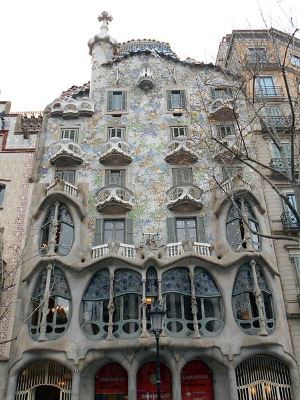
Casa Batlló 
Two-person sofa for the Casa Batlló 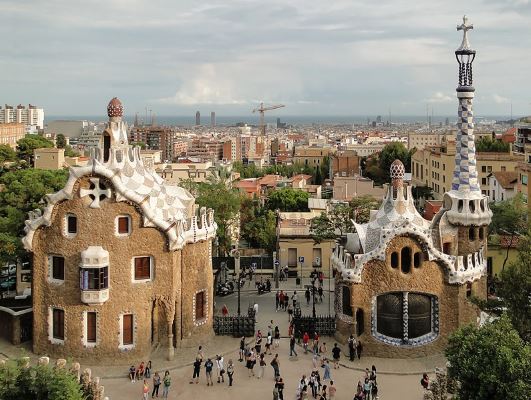
Parc Güell 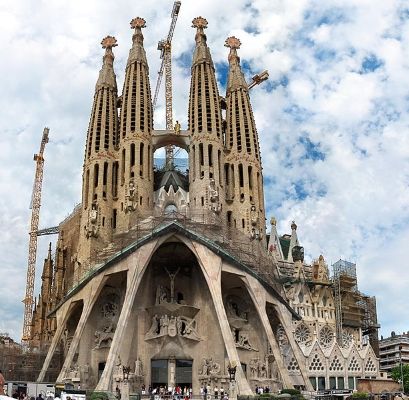
Expiatory Church of the Sagrada Família
Characteristics:
- Gauidi’s work employing organic or natural forms, curved or undulating lines, reclaimed materials, ceramic bricks, trenc adis mosaics
- He projects in such a way that the form does not become a mere stylistics caprice, but rather finds its reason for being in the function for which it was conceived
- He used steel inside of the building to reinforce his structure
Motifs & Ornamentation:
Guadí’s fantastical style was informed by a number of influences, and was very much a result of the late 19th century architecture, when the requirement to follow strict historical styles was beginning to fall out of favor. As such, Gaudí was able to take inspiration from Oriental styles, and was heavily influenced by the Revival Gothic architecture of the time. However, he believed that Gothic architecture was “imperfect,” and began to infuse his work with a variety of motifs drawn from nature.
Having studied geometry in his youth, Gaudí followed advances in engineering and his work regularly features catenary curves, hyperbolic paraboloids, hyperboloids and helicoids, shapes which he used to create efficient structures.
Influences on Other Designers:
- Victor Horta
- Hector Guimard
- Eugène-Emmanuel Viollet-le-Duc
- Joan Martorell
- Josep Fontserè
Contemporaries:
Architect Antoni Gaudí and Hector Guimard related themself with the Art Nouveau style and became famous for their expressive, organic-inspired designs, which commonly featured colorful flourishes and detailed iron- and glass work.
Videos:
Interesting Facts:
- Was unique, created his own unique style
- Never made plans, only 3D plans
- Never used straight lines, but curved lines
References:
https://www.biography.com/people/antoni-gaud%C3%AD-40695
https://www.archdaily.com/519298/happy-birthday-antoni-gaudi
 Discovering Designers: